Some fabrics ask you to notice the pattern. Others make you curious about how the pattern came to be.
Jacquard and tapestry fabrics do both. Their renewed presence in interiors speaks to an enduring appreciation for textiles with depth—fabrics where the design is not simply placed on the surface, but built into the cloth itself. The result can be intricate or understated, familiar or unexpected, but it gives the eye something more to discover.
At Anna Elisabeth, we find their appeal in that balance of history and possibility. These fabrics carry the character of traditional weaving without requiring a traditional setting. A patterned chair can bring an unexpected layer to a contemporary room; a quieter jacquard can lend dimension to a palette of solids and natural textures. The textile may have a long history, but what it contributes to a room is entirely a matter of how the designer uses it.

A Familiar Art, Seen Differently
Woven pattern has a long place in interiors. Generations of textile makers used color, yarn, and intricate construction to create motifs that became part of the character of a home. Jacquards and tapestries still carry something of that tradition—not as historical reproductions, but as textiles with a visible sense of making.
What's compelling now is how naturally they can sit alongside simpler forms. A room does not need antiques, ornate furniture, or a traditional palette to accommodate a richly patterned cloth. In fact, placing an intricate weave against a clean-lined silhouette or a restrained color scheme can make its detail all the more noticeable.
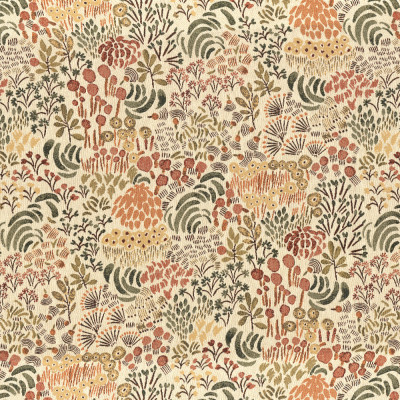
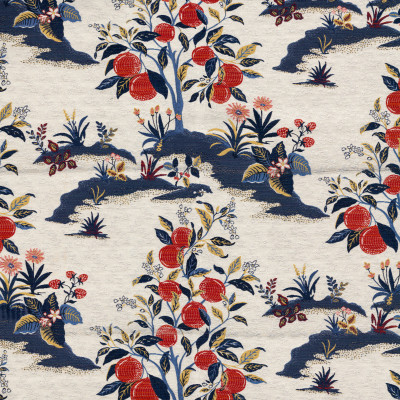
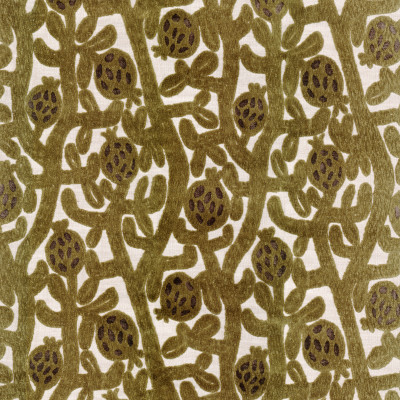
Anna Elisabeth’s tapestry fabrics offer a range of ways to approach that character. S8078 Tuscan, S8175 Pomegranate, and S7823 Indigo each provide a different starting point for considering how woven patterns might enter a room. The point isn't to recreate a period look. It's to recognize what a textile with history can add to a design that feels personal to the people living in it.
The Pattern Is Part of the Cloth
Jacquard describes a method of weaving patterns directly into fabric. The arrangement of the yarns creates the design, rather than a printed layer applying it to the surface. Tapestry, meanwhile, often describes a more richly detailed woven tradition. The terms overlap, but they are not interchangeable: jacquard describes how a fabric is constructed, while tapestry commonly refers to a particular kind of woven expression.
That distinction helps explain why these fabrics can look so different from one another. A woven motif might appear pronounced and graphic, or blend into the surface until you are close enough to see the detail. The relationship between yarn, color, and construction determines how clearly the pattern reads and how much texture it contributes.
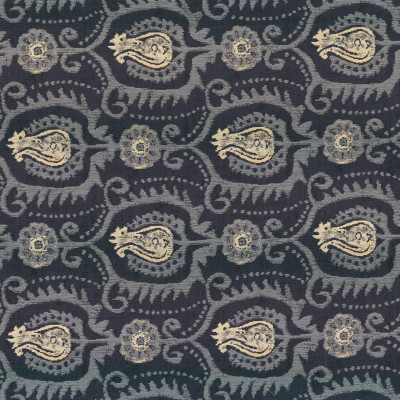
Consider S7823 Indigo. Against its deep indigo ground, pale gold paisley-like motifs alternate with softer slate-blue floral medallions, surrounded by scrolling, ornamental details. The pattern catches the eye because several layers seem to exist at once: the lighter motifs come forward, the darker details recede, and the woven texture gives the entire design a tactile, slightly irregular quality. Up close, you can see the threads defining the shapes; from farther away, those individual details come together into a rhythmic pattern with real presence.
What Happens When Light Meets the Weave
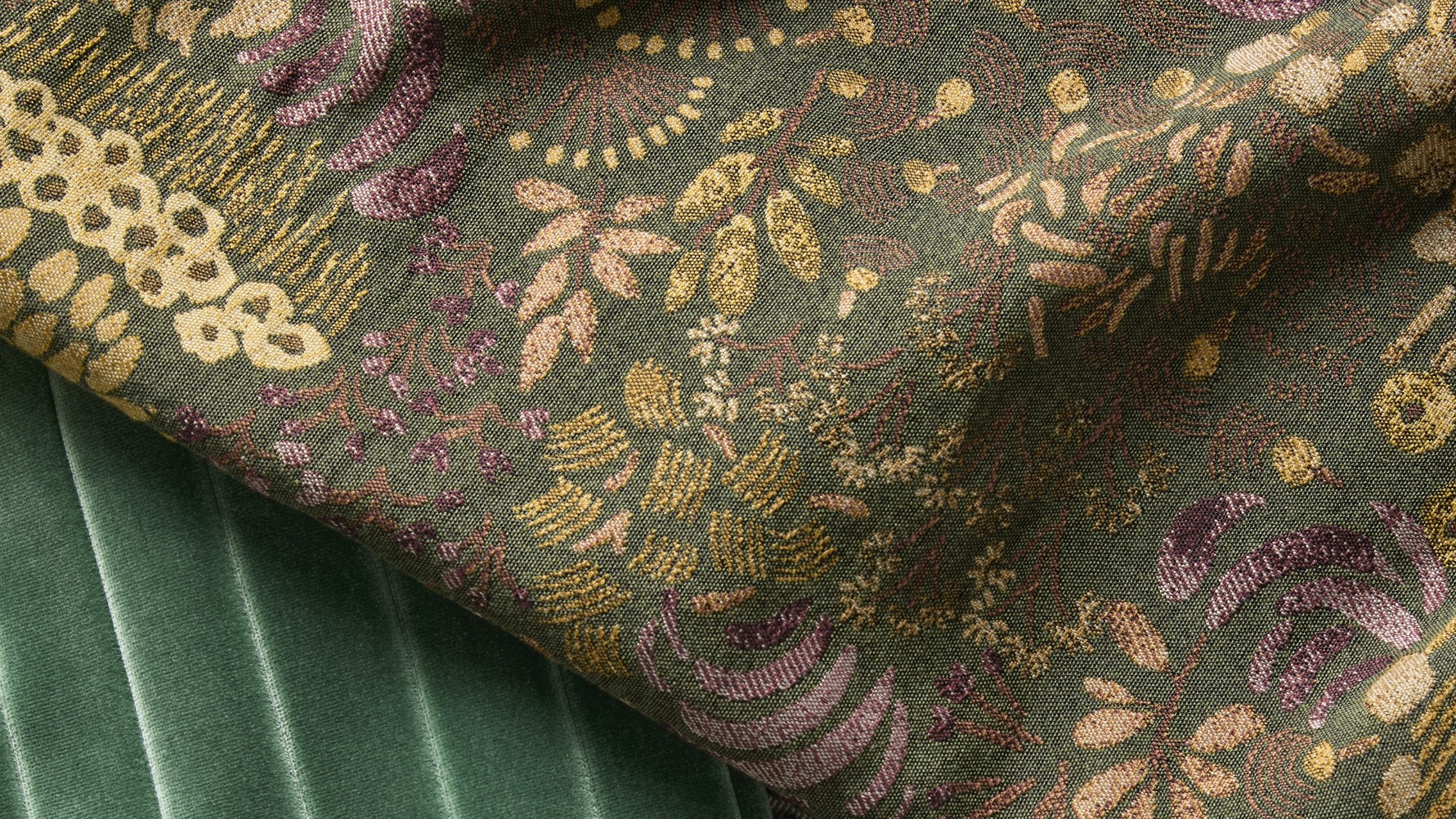
One of the pleasures of a woven fabric is that it can reveal different details as the light changes. Threads sit alongside and across one another, creating variations in surface and color that a flat image cannot always convey. Depending on the construction and yarns, a motif may become more pronounced from one angle, while the surrounding texture softens into the background.
This is also why seeing a fabric in person matters. A photograph can communicate the overall color and design, but it cannot fully show how a particular weave responds to movement and light. Turn a memo in your hands, move it closer to the window, and notice which details come forward. That small exercise can change how you imagine the fabric in a room.
Scale influences the effect, too. S7679 Marina, for example, has a smaller repeat of 6.75 inches horizontally and 6.375 inches vertically. Its specifications also list a soil-resistant finish, Crypton, and use for both upholstery and contract applications. It offers a useful counterpoint to the idea that patterned jacquards must be reserved for purely decorative moments: a fabric can bring visual interest and meet practical project requirements at the same time.
The construction, repeat, and performance details all deserve a place in the decision, but the experience of seeing the cloth in changing light is what brings those details together.
Let the Fabric Carry the Room
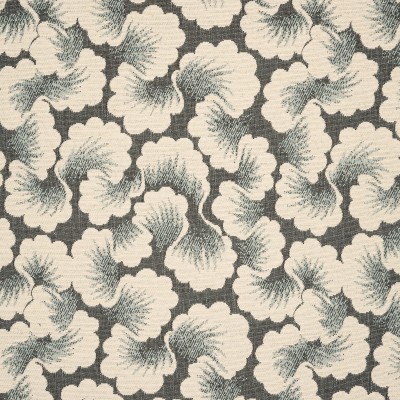
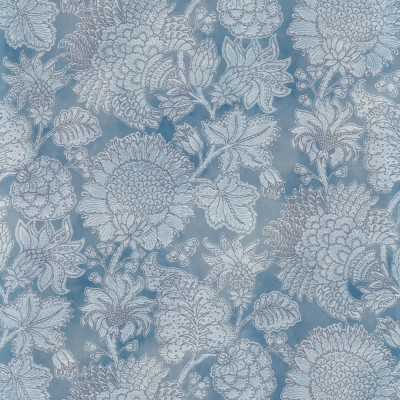
A richly patterned textile can become the starting point for a room, but it doesn't have to compete with every other layer. The strongest combinations often come from giving each fabric a different role.
A larger repeat, such as the 29-by-27-inch repeat listed for S7276 Plum, asks the designer to consider placement and how much of the motif will be visible on the finished piece. A smaller jacquard may work more quietly, connecting colors or contributing texture without becoming the focal point. Neither approach is inherently better; the question is what the fabric needs to do within the composition.
Once that role is clear, look for relationships among the other textiles. A solid can pick up a color in the woven motif. A velvet can introduce a different surface. A linen-look fabric can give the eye a quieter place to rest. These combinations allow a detailed textile to feel considered rather than isolated.
This is where jacquard and tapestry fabrics become especially interesting. Their history gives them character, but it doesn't prescribe how a designer must use them. One can ground a layered room, another can introduce a focal point, and another can provide depth that is felt before it is consciously noticed.

Bringing Woven Pattern Forward
The continued appeal of jacquard and tapestry lies in their ability to bring pattern, material, and craftsmanship into the same conversation. They remind us that a fabric can do more than supply color or an eye-catching motif: its construction can become one of the details that makes a room feel collected, individual, and complete.
That sensibility also runs through the Heritage Collection, where familiar textile traditions are considered for the layered interiors designers are creating today. The past is not a formula to follow. It is a source of ideas that can be interpreted in new ways.
When a jacquard or tapestry fabric catches your attention, take the time to look beyond the first impression. Notice the repeat, study the weave, and consider how its color and texture might interact with the rest of the room.
Explore tapestry fabrics browse our collections